Lone Star Rescue Ranch is currently in Phase 0 — organizational development & fundraising. 501(c)(3) status pending. Learn what that means →
AI Vision
Building an Intelligent Rescue Ranch for the Future
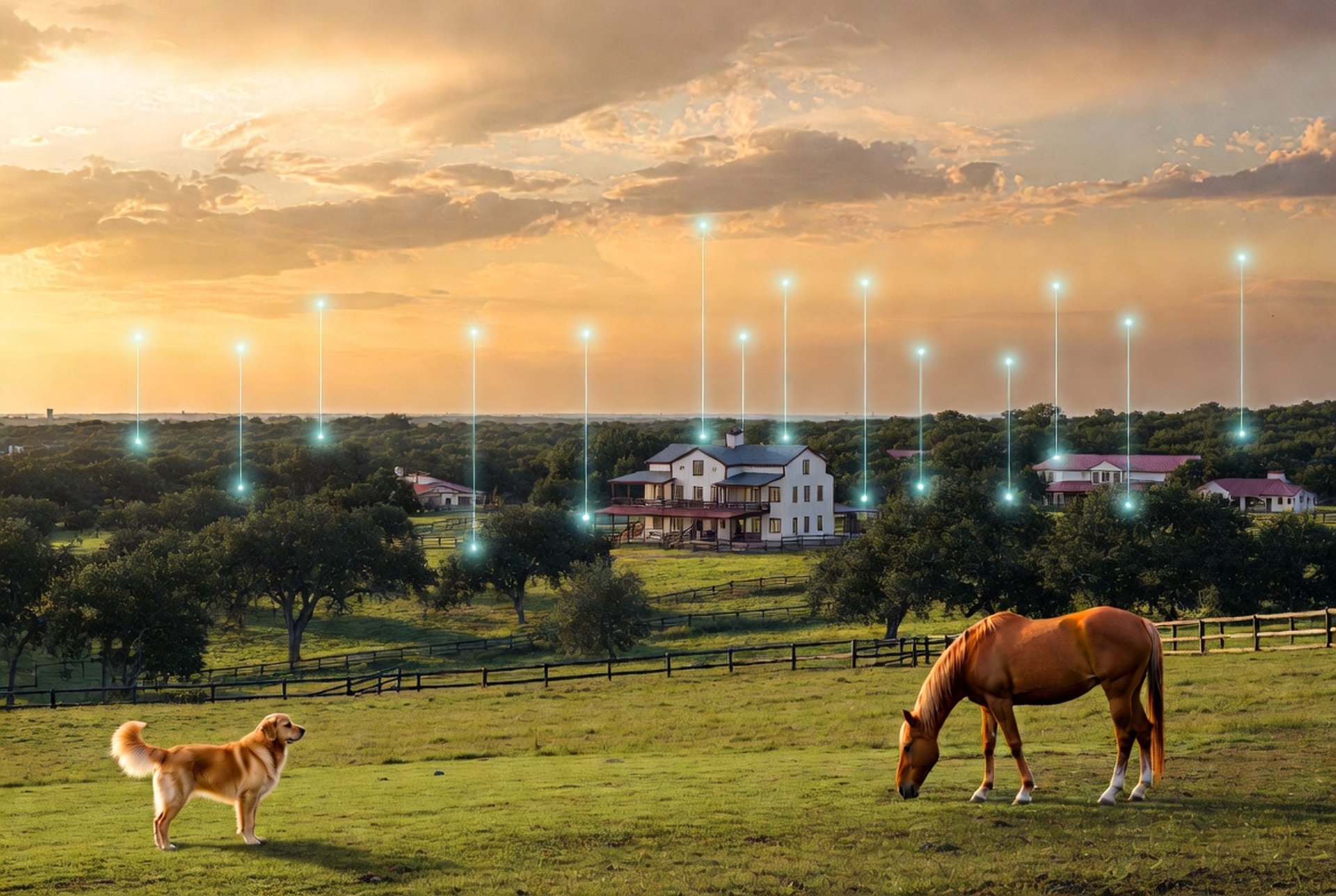
Lone Star Rescue Ranch is being designed as more than a traditional dog-and-horse rescue. Our long-term vision includes an intelligent campus model where technology supports animal care, staff efficiency, donor transparency, education, safety, and future-ready ranch operations.
AI will not replace compassion. It will support it.
The goal is to build a rescue ranch where people, animals, data, facilities, and future technology work together to create better outcomes for dogs, horses, families, volunteers, donors, and community partners.
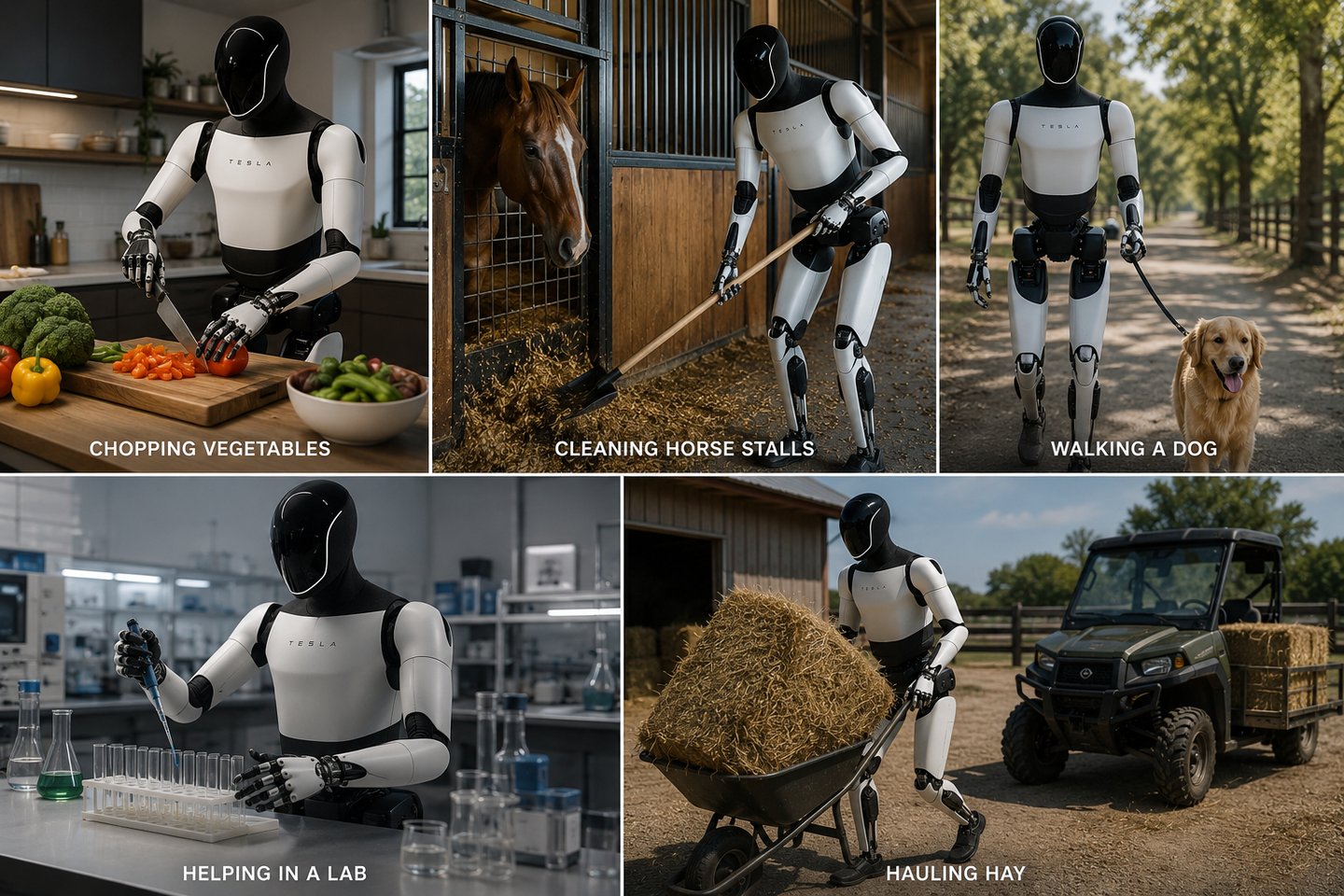
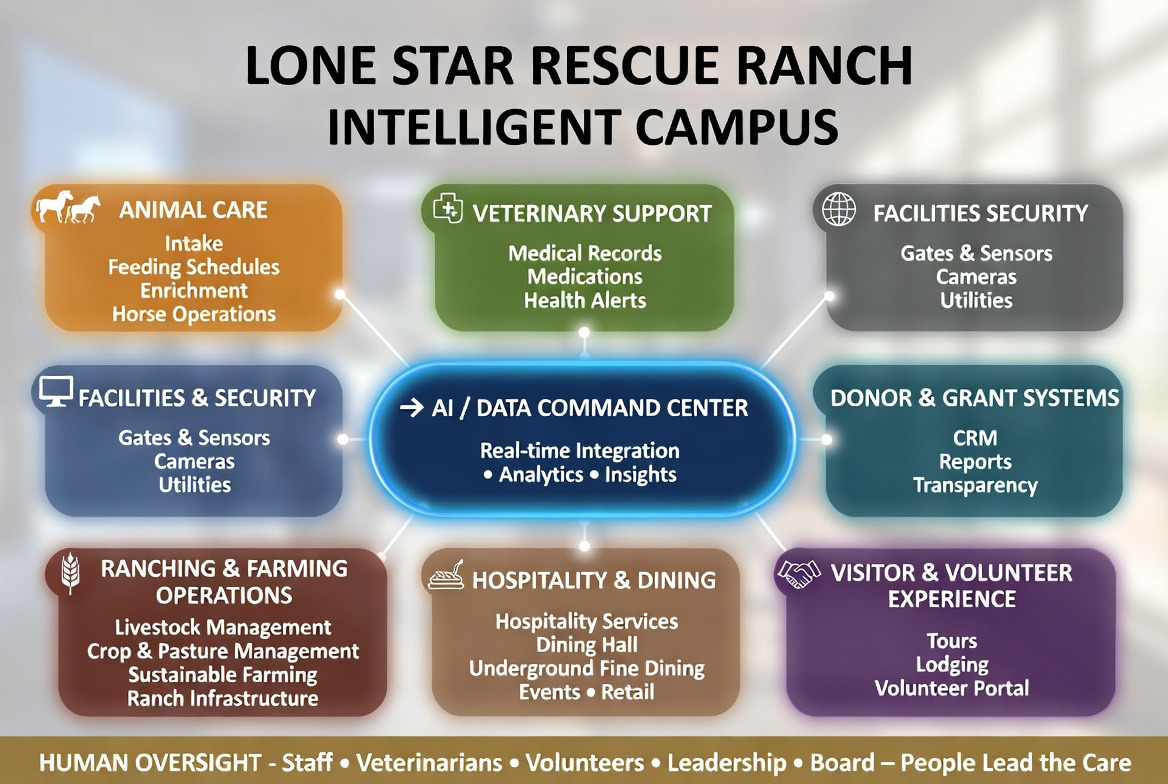
The LSRR Intelligent Campus connects animal care, veterinary support, facilities, security, donors, volunteers, visitors, hospitality, ranching, farming, and future robotics into one coordinated operating system. The goal is not to replace people, but to give staff, veterinarians, volunteers, leadership, and the board better tools to care for animals, manage the ranch, track outcomes, and communicate impact.
1. AI / Data Command Center
The AI / Data Command Center is the central intelligence layer of the ranch. It connects information from animal care, veterinary records, facilities, donors, volunteers, events, lodging, agriculture, and operations into one coordinated system.
This system helps leadership and staff see what is happening across the campus in real time. It can support dashboards, reminders, reports, alerts, maintenance schedules, donor updates, animal care records, volunteer coordination, and operational planning.
The command center does not replace human decision-making. It supports the people responsible for the ranch by organizing information, reducing missed tasks, and helping the team respond faster.
Key functions include:
Real-time campus information.
Animal care tracking.
Veterinary record coordination.
Maintenance and facility alerts.
Donor and grant reporting.
Volunteer and visitor coordination.
Operational dashboards.
Leadership reporting.
Data-backed planning and forecasting.
Responsible AI support under human oversight.
2. Animal Care
Animal Care includes the daily rescue, housing, feeding, enrichment, rehabilitation, and monitoring of dogs and horses. This is one of the most important parts of the Intelligent Campus because the entire system exists to improve animal welfare.
The system can help track intake dates, feeding schedules, medication reminders, behavioral notes, enrichment activities, exercise, grooming, kennel status, stall status, and animal progress over time.
For dogs, this may include intake, quarantine, kennel assignments, adoption readiness, playgroup notes, feeding needs, grooming, medical flags, and behavior observations.
For horses, this may include stall assignments, pasture rotation, feeding plans, hoof care, exercise, rehabilitation progress, turnout schedules, and handling notes.
Key functions include:
Animal intake records.
Feeding schedules.
Dog kennel tracking.
Horse stall and paddock tracking.
Daily care logs.
Enrichment schedules.
Behavioral notes.
Rehabilitation progress.
Adoption readiness tracking.
Staff and volunteer task assignments.
Alerts for missed feedings, medications, or care tasks.
3. Veterinary Support
Veterinary Support connects medical care, treatment notes, medication schedules, vaccinations, health alerts, and future hospital operations into the campus system.
This does not replace veterinarians or licensed medical professionals. Instead, it helps organize the information they need and gives animal care teams better visibility into medical needs.
The system may help track medical records, upcoming exams, vaccination dates, medication schedules, lab results, injury notes, treatment plans, quarantine status, and emergency alerts.
For a future 24/7 veterinary hospital, this system can help connect medical staff with intake teams, kennel teams, equine teams, and leadership so animal health needs are not missed.
Key functions include:
Medical records.
Medication schedules.
Vaccination tracking.
Health alerts.
Quarantine status.
Treatment plans.
Veterinary appointment scheduling.
Lab and diagnostic record tracking.
Post-surgery or recovery notes.
Emergency response alerts.
Medical supply tracking.
Reporting for donors, grants, and animal outcomes.
4. Facilities, Security & Utilities
Facilities, Security & Utilities covers the physical campus systems that keep the ranch safe, operational, and efficient. This includes gates, cameras, sensors, lighting, power, water, utilities, maintenance, barns, kennels, fencing, equipment, and access control.
The Intelligent Campus can help staff know when gates are open, when equipment needs maintenance, when utilities are interrupted, when temperatures are unsafe, or when a building needs attention.
This system is especially important on a large ranch where animals, staff, volunteers, visitors, vehicles, and equipment are spread across multiple zones.
Key functions include:
Gate monitoring.
Camera coordination.
Motion and access sensors.
Utility monitoring.
Power and water alerts.
Temperature monitoring in kennels, barns, and hospital spaces.
Fence and gate maintenance tracking.
Equipment maintenance schedules.
Building maintenance reminders.
Lighting and safety monitoring.
Emergency notifications.
Incident documentation.
Staff access and visitor safety support.
5. Donor & Grant Systems
Donor & Grant Systems help LSRR manage fundraising, donor relationships, grant opportunities, reporting, transparency, and stewardship.
This part of the Intelligent Campus connects the work happening on the ranch with the people and organizations funding the mission. It helps make sure donors, foundations, corporate partners, and grant funders can see how their support is being used.
The system can support donor records, campaign tracking, gift acknowledgments, grant deadlines, funding restrictions, reports, impact updates, naming opportunities, sponsorships, and donor communication.
Key functions include:
Donor CRM.
Grant prospect tracking.
Grant deadline calendar.
Gift and pledge tracking.
Donation receipts for recordkeeping.
Donor segmentation.
Major gift tracking.
Naming opportunity tracking.
Foundation reporting.
Corporate sponsor reporting.
Impact reports.
Funding transparency.
Campaign dashboards.
Phase 0 and capital campaign tracking.
6. Ranching & Farming Operations
Ranching & Farming Operations includes the working ranch systems that support animals, land care, food production, sustainability, and long-term self-sufficiency.
This may include pasture management, livestock support, hay and feed tracking, crop planning, poultry operations, egg production, composting, water usage, fencing, equipment, barn operations, and sustainable ranch infrastructure.
The Intelligent Campus can help organize schedules, supplies, production records, maintenance, animal support needs, and land-use planning.
Key functions include:
Livestock management.
Horse pasture rotation.
Crop and pasture planning.
Hay inventory.
Feed inventory.
Poultry and egg production tracking.
Water usage tracking.
Soil and pasture condition notes.
Equipment maintenance.
Barn and storage management.
Sustainable farming records.
Ranch infrastructure planning.
Supply alerts.
Production reporting.
7. Hospitality & Dining
Hospitality & Dining includes future guest services, food service, dining hall operations, events, retail, and possible earned-revenue activities that support the ranch mission.
This area should be presented carefully as a future support function, not the central mission. The purpose is to help create a self-sustaining model where appropriate guest experiences and events generate income that helps support animal care.
The Intelligent Campus can help manage reservations, event schedules, meal planning, retail inventory, guest communication, donor visits, volunteer meals, and visitor experiences.
Key functions include:
Dining hall coordination.
Event meal planning.
Guest reservations.
Donor visit coordination.
Retail inventory.
Event scheduling.
Food service planning.
Volunteer meal support.
Hospitality staff scheduling.
Guest communication.
Revenue tracking.
Safety and access coordination.
Future lodging and dining integration.
8. Visitor & Volunteer Experience
Visitor & Volunteer Experience covers the systems that help people engage with the ranch safely and meaningfully. This includes tours, volunteer signups, training, scheduling, lodging interest, events, education visits, donor visits, and community programs.
The Intelligent Campus can help visitors and volunteers know where to go, what to do, when to arrive, what forms are needed, and how they can help. It can also help staff manage volunteer hours, training status, assignments, waivers, background checks, and communication.
For Phase 0, this system can begin with online forms, volunteer interest lists, donor packet requests, and founding follower signups. As the ranch grows, it can expand into scheduling, check-in systems, tour management, and volunteer portals.
Key functions include:
Volunteer interest forms.
Volunteer scheduling.
Volunteer training records.
Tour scheduling.
Visitor check-in.
Event registration.
Lodging interest forms.
Waivers and safety acknowledgments.
Education program inquiries.
Therapy partner inquiries.
Donor visit coordination.
Volunteer portal.
Communication updates.
Hours and impact tracking.
9. Human Oversight
Human Oversight is the most important safeguard in the Intelligent Campus model. Technology supports the ranch, but people lead the care.
The system should be designed around staff, veterinarians, volunteers, leadership, and the board. AI, automation, sensors, dashboards, and robotics should help people make better decisions, not replace professional judgment or compassionate animal care.
Every major animal care, medical, safety, donor, volunteer, and operational decision should remain under human review.
Human oversight includes:
Staff supervision.
Veterinary judgment.
Volunteer coordination.
Leadership review.
Board accountability.
Animal welfare standards.
Safety protocols.
Ethical technology use.
Privacy and data protection.
Final decision-making by qualified people.
Regular review of AI-supported recommendations.
Clear responsibility for every system and task.
10. How the System Works Together
The LSRR Intelligent Campus works by connecting each major operating area to a central command structure.
Animal care teams enter daily notes. Veterinary teams update health records. Facilities teams receive maintenance alerts. Donor teams generate impact reports. Volunteers sign up and receive assignments. Visitors register for tours or events. Ranching teams track feed, hay, water, pasture, and equipment needs.
The AI / Data Command Center brings this information together so leadership can see the full picture of the ranch.
The result is a smarter, safer, more transparent operating model.
The goal is simple:
Better care for animals.
Better coordination for staff.
Better reporting for donors.
Better safety for visitors and volunteers.
Better planning for leadership.
Better long-term sustainability for the ranch.
Join the Future of Responsible Innovation
Lone Star Rescue Ranch is more than a rescue — it is a living laboratory where ethical AI and robotics are being tested and refined for the benefit of animals and beyond.
We invite you to be part of this journey.
Whether you are a donor, partner, veterinarian, technologist, or simply someone who believes in a better future for animal welfare, your support and ideas matter.
Together, we can prove that advanced technology and deep compassion can work hand in hand.
Phone: 979-571-2259
Copyright: © 2026 All rights reserved
Blog link: /blog
Contacts
info@lonestarrescueranch.com